
Social Behavior Model. Menschen und Kultur.


Vorwort

In diesem Beitrag geht es um die Frage, ob und wie man menschliches Verhalten klassifizieren, also einschätzen kann. Also zumindest mit einer gewissen Wahrscheinlichkeit, weil ja am Ende jeder Mensch doch wieder ein wenig anders tickt. Das heßt aber nicht, dass es hier darum geht, Menschen in eine Schublade zu drücken und ihnen die Nachteile, die diese Schublade mit sich bringt, zum Vorwurf zu machen.

Das Social Styles Model unterscheidet vier Merkmale, um einen Mensch einzuschätzen, und gibt eine Anfangsidee zum Umgang mit dem Typ. Aufgrund seiner Einfachheit eignet es sich gut für’s Alltagsgespräch. Aber denken Sie daran, dass jeder Mensch ein bisschen was von jeder Schublade hat.

Continue reading “Social Behavior Model. Menschen und Kultur.”

Drei Fragen an Marina Weisband (1): der Klimawandel.

Vorwort.

Unsere kleine Abstimmung im Internet. Was ist die beste Idee unserer User?
Und was ist der Mehrwert globaler Interaktion an sich? – warum entstehen überall diese SocialMedia-Netze, zu denen man ständig auf’s neue eingeladen wird?

Was wir als nächstes tun, entscheiden Sie – unsere Kunden aus dem Internet. Viele sind oft schlauer als einer, und wir verlassen uns gern auf die Wünsche unserer Kunden. Nun, weltweit stellen immer mehr Menschen ihre Lösungen online.

Was ist der Vorteil davon?

Continue reading “Drei Fragen an Marina Weisband (1): der Klimawandel.”

about motivation, creativity, and successful employee development.

ever felt that you got so many ideas, but nobody is able to understand you? –

this is about the key to innovation in every one of us. a recommendation for everyone interested in creating a work environment for motivated, creative, and solution-finding employees. a couple of years ago, reading this document meant a lot for me.

Continue reading “about motivation, creativity, and successful employee development.”

Systems thinking and sustainability: A logical connection.

excellent description of the sustainability approach that we learn from nature.

Angelika Schanda's avatarYoung Modeler

By Carlo Cuijpers
Located in Amsterdam, Netherlands
Sustainability/corporate social responsibility consultant at KPMG

European Master in System Dynamics, Class 2012-2014
Interests: systems and sustainability thinking, modelling sustainability issues


The average person has most likely never heard of ‘’Limits to Growth’’(Meadows, Meadows, Randers, & Behrens III, 1972), or the Club of Rome. Nevertheless, every systems thinker is familiar with the book and the story behind it – from reading it, watching the film (Last Call, 2012) or from their studies. It is possibly the systems thinking study which has received the most attention. As a consequence, the study caused a spike in interest in the field. Ever since there has been a strong link between systems and sustainability thinking.

View original post 383 more words

welcome, world.

This website will open 2016-01-01 for the Public World.

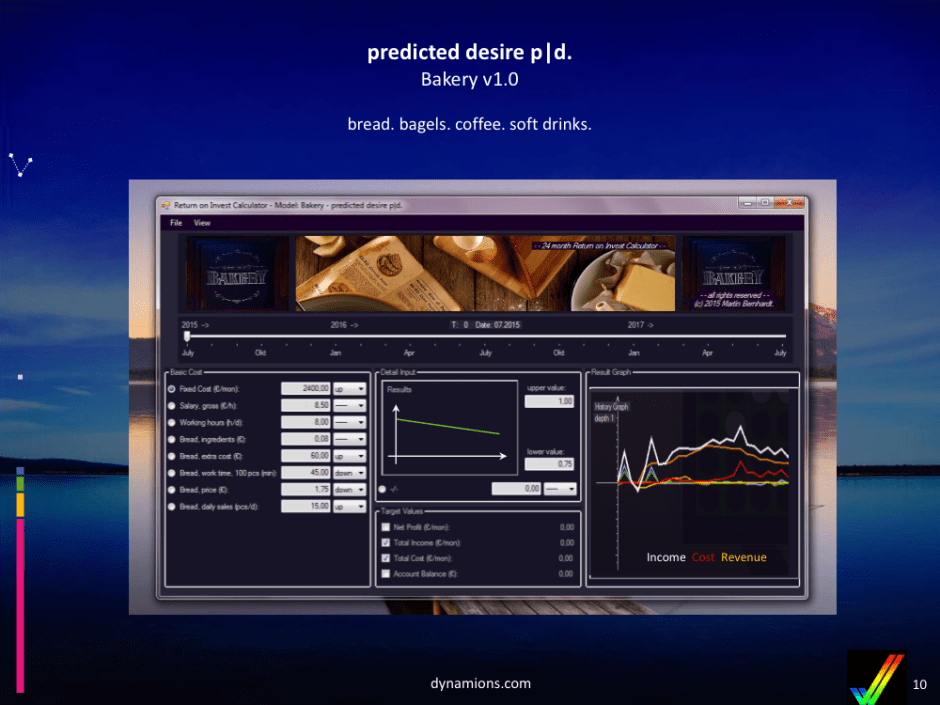
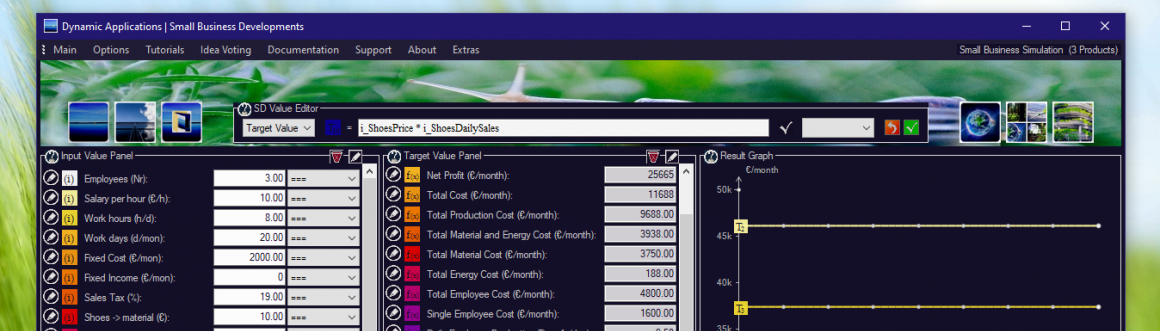
This project intends to provide everyone interested with a software that allows to develop financial, technological, and environmental simulations, based on System Dynamics (in the U.S. known as Business Dynamics), with a special focus on small business amortization and general prognosis calculations.

The author of this blog intends to open a strategic advisory consulting on 01 January 2016. Free Software provided on this blog intends to underline qualifications and competence of the author.

Continue reading “welcome, world.”